Oil and Algorithms
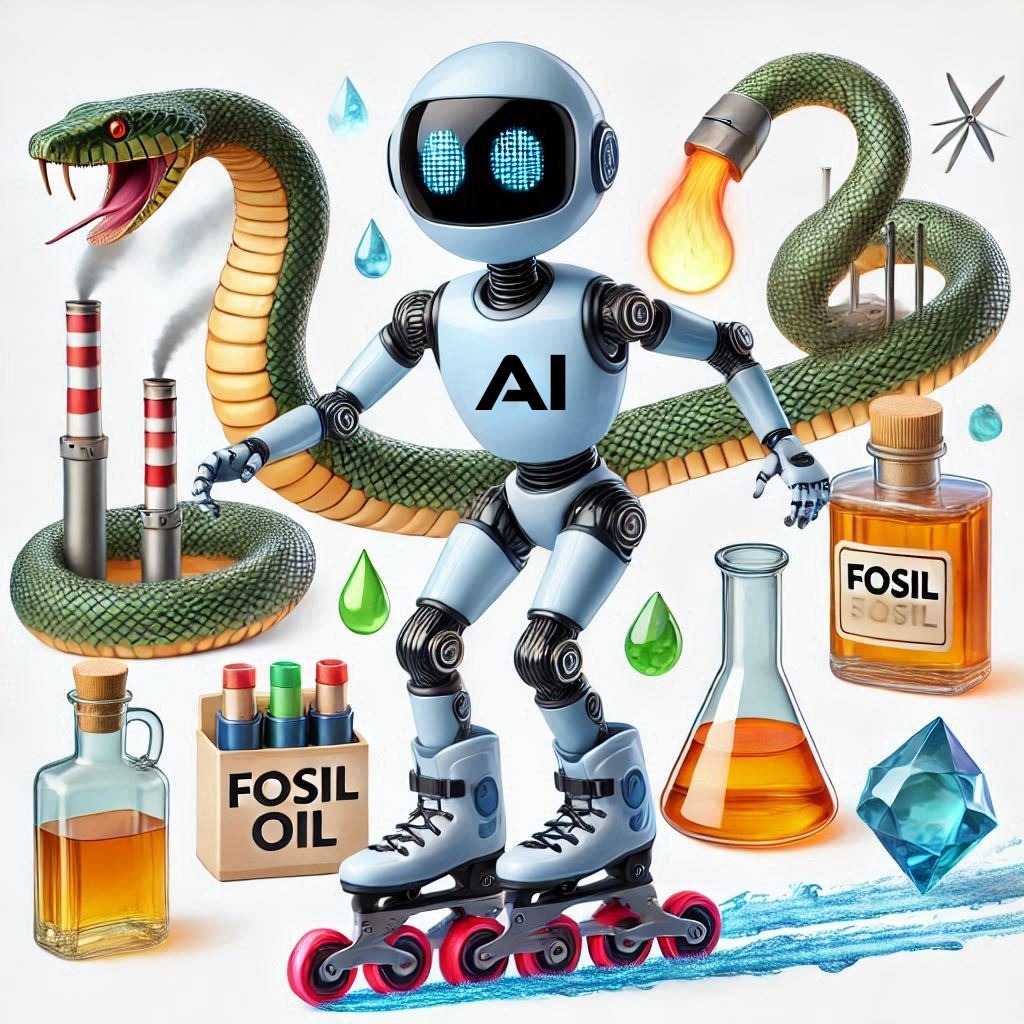
In 2006, Clive Humby, a British mathematician, and data scientist, famously coined the phrase “data is the new oil” to highlight the immense value of data in the modern world, much like oil has historically been a valuable resource. The advent of Big Data Analytics and machine learning models within the realm of AI has exponentially increased the power of information systems. These advanced algorithms act as “refineries,” extracting value from raw data and serving as the currency of the contemporary world. These refineries are pivotal in the data-driven economy, enabling companies to harness AI effectively. However, as the excitement around AI systems surged, so did skepticism. This led to the question: Are AI systems the new snake oil?
In his book, “AI Snake Oil,” Princeton University’s Professor Arvind Narayanan, co-authored with Sayash Kapoor, addresses several critical issues such as misleading claims, harmful applications, and the big tech control of AI.
Power of Algorithms
Machine learning algorithms, including regression, classification, clustering, neural networks, and deep learning, identify patterns and make predictions based on data. Natural Language Processing (NLP) algorithms enable computers to understand, interpret, and generate human language, facilitating tasks like sentiment analysis and text summarization. Recommendation systems predict user preferences and suggest products, content, or services accordingly. Generative AI (GenAI) creates content such as text, images, music, and videos, with technologies like ChatGPT, DALL-E, and OpenAI’s Sora making a significant impact on daily life and work. Used as a tool, AI Copilots help developers reduce the time between idea and execution despite the need for constant refactoring of generated code and dealing with edge cases missed by AI.
Successful AI Applications and Disappointments
AI has found success in various domains:
– IBM uses predictive AI for customer behavior analysis and supply chain optimization.
– Amazon implements predictive models for demand forecasting and inventory management.
– Google employs predictive analytics for ad targeting and search result optimization.
– Netflix leverages predictive analytics for personalized content recommendations.
– UPS uses predictive models for route optimization and vehicle maintenance.
– American Express deploys predictive analytics for fraud detection and credit scoring.
– H2O.ai’s models at Commonwealth Bank, Australia, assist in fraud detection, customer churn, merchant retention, and more.
However, there have been notable disappointments. AI systems have perpetuated biases, leading to unfair hiring practices, incorrect medical diagnoses, and discriminatory outcomes. These incidents highlight the potential harms of AI when not properly designed, implemented, and used.
Responsible AI
The importance of transparency, accountability, and ethical considerations in AI development and deployment is now widely recognized. Instances of AI blunders, such as Google’s GenAI tool Gemini generating politically correct but historically inaccurate responses, underscore the challenges of training AI on biased data and balancing inclusivity with accuracy.
Governments and institutions are increasingly focused on AI safety. Projects at leading universities sponsored by Governments & big tech companies aim to establish industry-specific guidelines. Some of these guidelines may become regulations, with hefty fines for violations, as seen with the EU AI Act. The debate on AI regulation versus innovation continues, with developers expected to self-regulate in the absence of enforceable laws. Enterprises using AI systems can adopt standards like ISO/IEC 42001:2023 to manage AI responsibly, ensuring ethical considerations, transparency, and safety.
Impacts of Advanced AI and Future Considerations
Innovations in AI algorithms are continually benefiting society. For example:
– Google AI collaborates with the UK’s NHS to improve breast cancer screening consistency and quality.
– AlphaFold2, the 2024 Nobel Prize-winning AI model, has revolutionized protein structure prediction, accelerating drug discovery and biotechnology.
– Google’s DeepMind’s GenCast predicts weather and extreme conditions with unprecedented accuracy.
Generative AI has advanced significantly, with models like OpenAI’s ‘o3’ overcoming traditional limitations and adapting to new tasks. These models have performed well on ARC-AGI (Abstraction and Reasoning Corpus for Artificial General Intelligence) benchmarks, marking progress towards AGI.
As AI advances towards AGI, concerns about rogue AI agents and their potential threats grow. Autonomous Replication and Adaptation (ARA) could lead to AI agents evading shutdown and adapting to new challenges. AI containment strategies are evolving to address these risks.
AI Landscape: Big Techs, Businesses and Us
Big tech companies like Microsoft, Alphabet, Meta, and Amazon are set to invest over $1 trillion in AI in the coming years. McKinsey reports that businesses are dedicating at least 5% of their digital budgets to GenAI and analytical AI. While big tech companies skate fearlessly in the slippery zone between snake oil and the new oil to conquer the AI landscape, businesses appear to tread cautiously, concerned with ROI and responsible AI use. AI safety guidelines and regulations can serve as guardrails for us, the individuals, to navigate the slippery terrain between snake oil and the new oil.
 COSMICOUS
6 responses to “AI – The Currency between Snake Oil and New Oil”
Data refinery is interesting. If data is fossil fuel, how can we move to alternative data like alternative fuel. Most evolution, some most significant, till last century had happened without digital data and fossil fuel.
LikeLike
Yes, that is an important observation. There are approaches like ‘less than one-shot’ or LO-short learning – where AI can predict more with less data than it was trained on. Even though this can radically reduce data requirements to build a functioning AI model, the research is in early stage and there is a lot of pessimism around it. Child learns with fewer examples and faster; sometime don’t need examples at all (and when grows up creates AI models) – the reason for the evolutions even now; LO short learning is learning from these ideas.
LikeLike
Yes, we are living in a time where we have an AI solution for every aspect of our life. At home, on the road going to work, at work, in our entertainment room after we come back from work, with our wellness checks at hospitals, AI is everywhere. What is missing is a statutory body that can regulate this industry. In the absence of such body, simple rule of thumb is to keep the greater common good in mind when designing new AI based systems. Will the big tech companies keep that in mind? Or use AI to enrich themselves? Governments should wake up now and be proactive in regulating this budding industry, in my opinion. Or else we may have deal with too many snake oil producers!!
LikeLike
Industry specific regulations for Enterprises using AI and Self-regulation for Hi-tech companies creating foundation models.
LikeLike
Strict standards as well as enforcement legal framework are to be created and any deviation is to be viewed seriously with dire consequences. In case of any data breach common people would lose money, reputation etc and adequate compensation is to be envisaged.
LikeLike
Interesting insights into challenges and issues raised by AI applications provided by very large Information Technology providers, and involved large government organizations that have started to try to regulate this domain. In addition, there will be a lot of much smaller providers of AI applications, many of which will be plagued as well by similar biases and ethical issues. Regulations by themselves are not the full solution, and it must be supported by a right set of tools to monitor and report deviations. Such ‘compliance verification’ tools must not limit themselves to large IT providers and large governmental organizations but should as well be develop to tackle a large variety of AI nice-markets, and less technology savvy users.
LikeLike